

Proton Pump Inhibitors (PPI) Market Forecast at US$ 5.8 Bn by 2033: Persistence Market Research
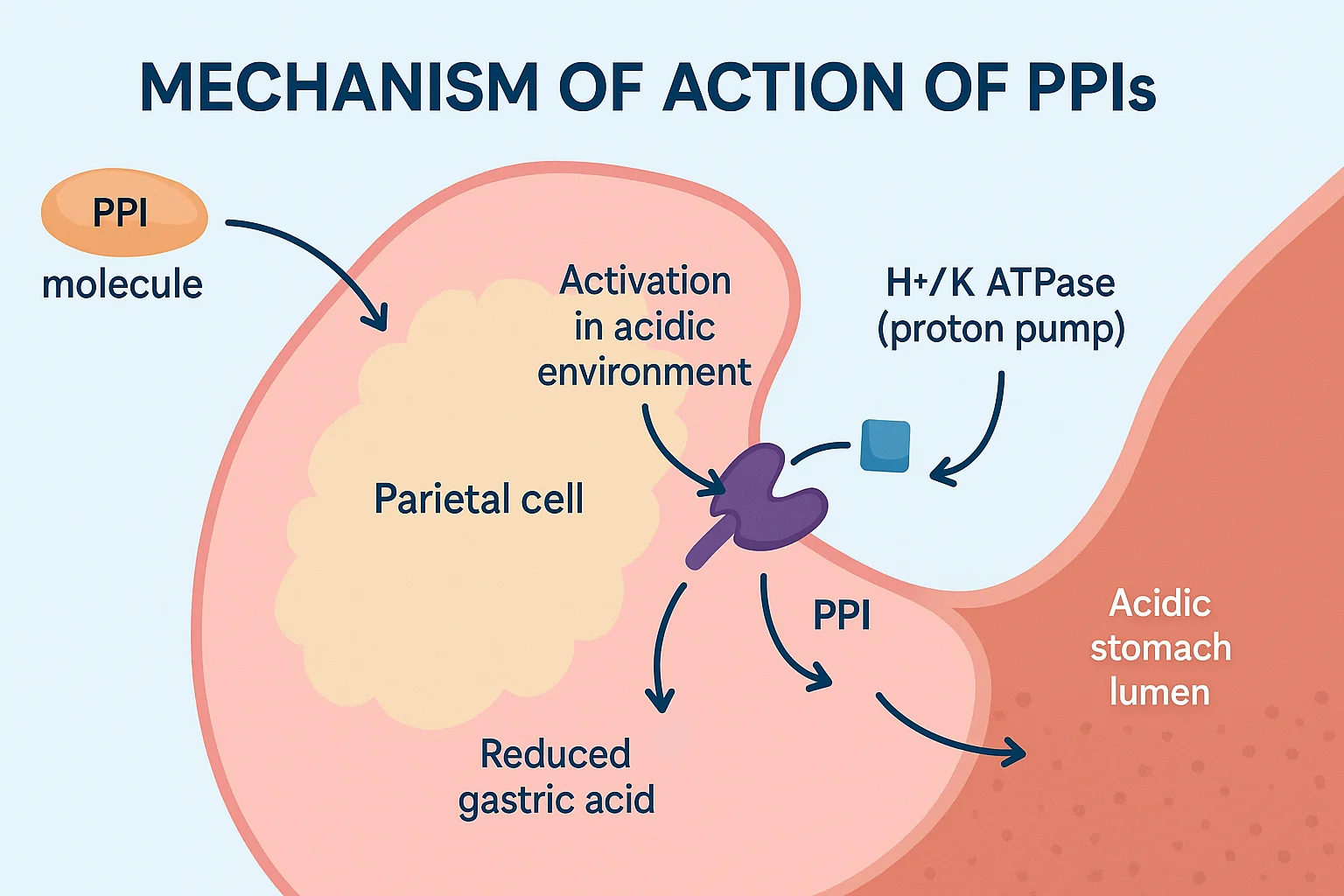
proton pump inhibitors (PPI) market
Overview of the proton pump inhibitors market, highlighting key trends, drivers, challenges, and growth opportunities across regions and segments.
LONDON, UNITED KINGDOM, March 23, 2026 /EINPresswire.com/ -- The global proton pump inhibitors (PPI) market is projected to reach US$ 3.9 billion in 2026 and expand to US$ 5.8 billion by 2033, registering a compound annual growth rate (CAGR) of 5.8% during the forecast period. This steady growth is primarily driven by rising patient volumes, increased reliance on long-term maintenance therapy, and expanding over-the-counter (OTC) availability. Demand is particularly strong across Asia Pacific and Latin America, where improving healthcare access and affordability are accelerating adoption.
A key structural driver of the market is the growing prevalence of gastroesophageal reflux disease (GERD). Factors such as aging populations, sedentary lifestyles, obesity, and high consumption of nonsteroidal anti-inflammatory drugs (NSAIDs) are contributing to increased incidence rates. Additionally, regulatory frameworks across major regions continue to encourage OTC transitions and generic substitution, supporting consistent volume growth despite pricing pressures.
Download Your Free Sample & Explore Key Insights: https://www.persistencemarketresearch.com/samples/36048
Market Drivers and Growth Dynamics
The increasing burden of chronic acid-related disorders remains the primary growth catalyst for the PPI market. GERD prevalence continues to rise globally, while NSAID consumption is also expanding due to aging populations and higher rates of musculoskeletal conditions. Clinical guidelines recommend PPIs as first-line therapy for GERD and as preventive treatment for NSAID-induced gastric complications, ensuring sustained baseline demand.
Another important growth factor is the shift toward flexible treatment approaches, including on-demand dosing and intermittent therapy. These strategies align with evolving clinical practices that prioritize safety while maintaining symptom control. As a result, PPIs remain widely prescribed across both primary care and hospital settings.
Market Restraints
Despite strong demand fundamentals, the market faces increasing regulatory and clinical scrutiny related to long-term PPI use. Studies have linked prolonged usage with potential risks such as nutrient deficiencies, kidney disease, and bone fractures. Although causal relationships remain debated, healthcare providers are adopting more cautious prescribing practices.
Guidelines now emphasize shorter treatment durations, step-down therapy, and periodic reassessment. This trend is reducing average treatment duration per patient, particularly in developed markets. Additionally, widespread generic substitution is intensifying price competition, limiting revenue growth despite stable or rising patient volumes.
Emerging Opportunities
Significant opportunities exist in the expansion of OTC products and growth in emerging markets. Regulatory support for OTC availability is enabling self-medication and improving access for patients with mild or intermittent symptoms. At the same time, countries such as India, China, and Brazil are witnessing rapid growth in diagnosed and treated patient populations.
Rising healthcare awareness, expanding insurance coverage, and improved clinical infrastructure are facilitating earlier diagnosis and treatment. These factors are creating large-scale volume growth opportunities, particularly for generic manufacturers and regional pharmaceutical companies with strong distribution networks.
Get Custom Insights Designed for Your Businecss: https://www.persistencemarketresearch.com/request-customization/36048
Segment Analysis
Among drug types, omeprazole-based formulations are expected to dominate the market, accounting for approximately 32% of revenue in 2026. Their widespread availability, cost-effectiveness, and strong clinical familiarity make them a preferred choice in both prescription and OTC settings.
In terms of therapeutic indications, GERD represents the largest segment, contributing around 58% of total market revenue. The chronic nature of the condition and high recurrence rates support sustained demand. Meanwhile, NSAID-induced gastropathy prophylaxis is emerging as a high-growth segment due to increasing preventive prescribing practices.
By route of administration, oral formulations dominate the market with a share exceeding 90%, supported by convenience and suitability for long-term use. Intravenous PPIs, however, are witnessing faster growth due to their increasing use in intensive care settings and acute gastrointestinal conditions.
Regional Insights
North America holds the largest market share, accounting for approximately 34% in 2026. High diagnosis rates, strong healthcare infrastructure, and widespread OTC penetration are key contributors. However, growth remains moderate due to market maturity and increased focus on deprescribing.
Europe represents around 27% of the market, characterized by stable demand and strict regulatory oversight. Generic competition and pricing controls dominate the regional landscape, although aging populations continue to support baseline demand.
Asia Pacific is the fastest-growing region, with a projected CAGR of 7.4%. Rapid urbanization, improving healthcare access, and rising awareness are driving significant volume growth. Local manufacturing expansion and supportive regulatory reforms are further enhancing market accessibility and affordability.
Checkout Now & Download Complete Market Report: https://www.persistencemarketresearch.com/checkout/36048
Competitive Landscape
The global PPI market is moderately fragmented, with competition driven primarily by generic manufacturers and multinational pharmaceutical companies. As most active molecules are off-patent, differentiation is limited, shifting the focus toward cost efficiency, large-scale production, and extensive distribution networks.
Market Segmentation
By Drug Class
Omeprazole
Esomeprazole
Pantoprazole
Lansoprazole
Potassium-Competitive Acid Blockers (P-CABs)
Others
By Therapeutic Indication
Gastroesophageal Reflux Disease (GERD)
Peptic Ulcer Disease (PUD)
H. pylori Infection
Stress Ulcer Prophylaxis
Zollinger-Ellison Syndrome
Nonsteroidal Anti-Inflammatory Drug (NSAID)-Induced Gastropathy Prophylaxis
By Route of Administration
Oral
Intravenous
By Region
North America
Europe
East Asia
South Asia & Oceania
Latin America
Middle East & Africa
Companies are increasingly investing in formulation improvements, OTC expansion, and emerging market penetration to sustain growth. Strategic emphasis on supply reliability, regulatory compliance, and digital pharmacy partnerships is becoming essential for maintaining competitive advantage in a volume-driven market.
Read Related Reports:
Narcotic Analgesics Market: The global narcotic analgesics market is expected to grow from US$32.8 Bn in 2026 to US$53.9 Bn by 2033, registering a 5.2% CAGR during 2026–2033.
In Vitro Toxicology Testing Market: Global in vitro toxicology testing market to grow from US$10.3 Bn in 2026 to US$19.4 Bn by 2033, registering a 9.5% CAGR driven by alternative testing methods.
Persistence Market Research
Persistence Market Research Pvt Ltd
+1 646-878-6329
email us here
Visit us on social media:
LinkedIn
Instagram
Facebook
YouTube
X
Legal Disclaimer:
EIN Presswire provides this news content "as is" without warranty of any kind. We do not accept any responsibility or liability for the accuracy, content, images, videos, licenses, completeness, legality, or reliability of the information contained in this article. If you have any complaints or copyright issues related to this article, kindly contact the author above.
